Description
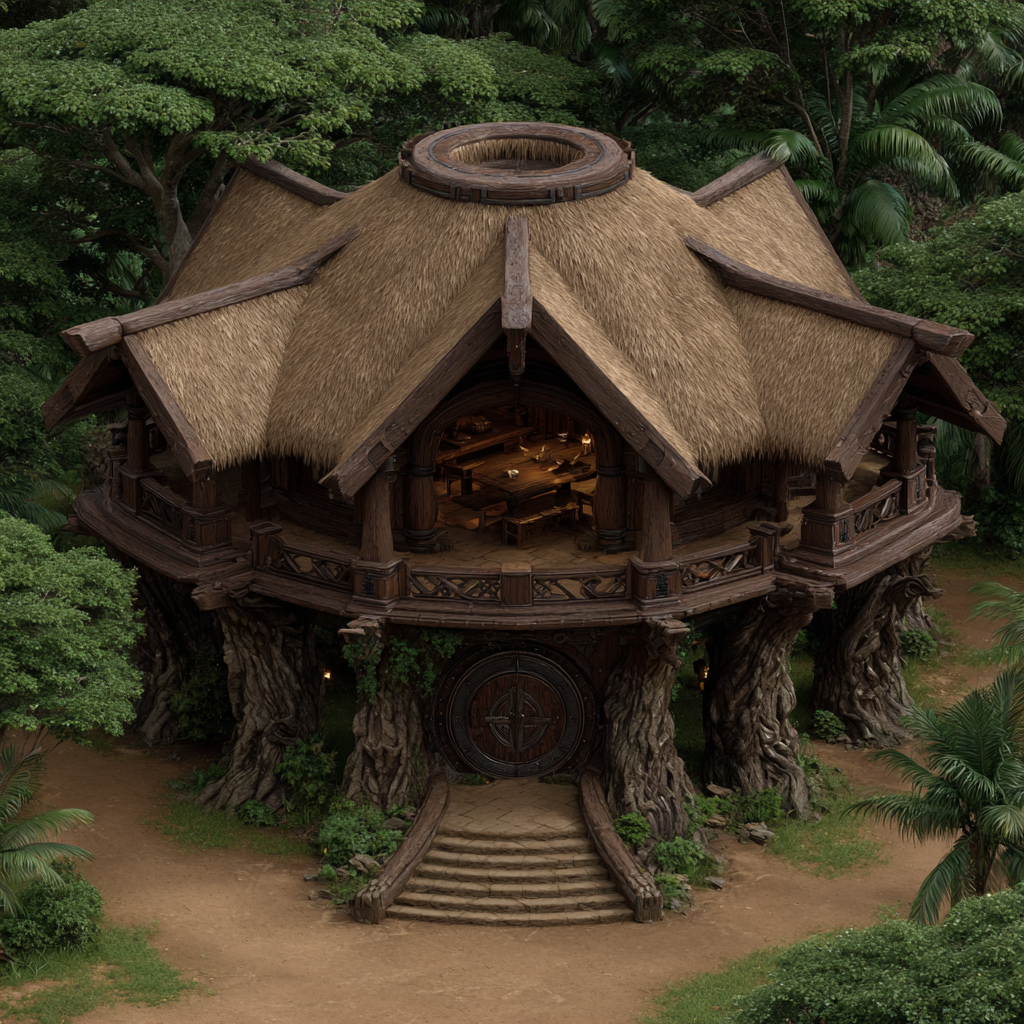
The Ranger's Outpost occupies a strategic position at the edge of the Ancient Heart, where the oldest, densest forest begins to transition toward the more open areas of Autumn's Edge. This location provides rangers with quick access to both the settlement's interior and the outer borders they patrol, while the natural concealment of the surrounding ancient trees helps mask the outpost's presence from distant observation. The structure itself represents a compromise between defensive necessity and druidic philosophy, built primarily from living wood shaped through Goodberry's magic but reinforced with carefully selected stone and hardened timber where structural demands require it. The result is a building that appears to grow naturally from the forest floor, its walls formed by the trunks of four massive oaks whose branches have been encouraged to interweave overhead, creating a living roof that remains green and vital even as it shelters the rangers below.
The main hall of the outpost serves as the operational heart of the settlement's ranger corps, a large open space approximately thirty feet square dominated by a central planning table carved from a single enormous cross-section of fallen oak. This table displays a detailed relief map of the entire Elderwood Grove and surrounding territories, carved with remarkable precision to show terrain features, water sources, game trails, and the locations of all defensive installations. Colored stones mark the positions of Watcher's Perches, Alert Bird Roosts, pitfall locations, and patrol routes, allowing rangers to visualize their defensive network at a glance and adjust deployments based on changing circumstances. Around the perimeter of the hall, weapon racks hold spare bows, spears, and staves, while shelves store equipment such as rope, climbing gear, signal horns, and medical supplies. Maps drawn on cured hide hang from the walls, showing detailed surveys of specific regions that rangers consult when planning patrols or responding to reports of unusual activity.
Living quarters occupy the second level of the outpost, reached by a sturdy staircase carved into the living trunk of one of the supporting oaks. This upper floor contains twelve sleeping alcoves, each large enough for a bunk, a small storage chest, and personal effects. The alcoves are separated by woven screens that provide privacy while maintaining air circulation and a sense of community among the rangers. Windows positioned at strategic intervals allow natural light to filter in during the day while providing clear sightlines to the surrounding forest, turning the sleeping quarters into secondary observation posts where off-duty rangers can remain alert to potential threats even while resting. A common area with benches and a small hearth provides space for rangers to gather, share meals, repair equipment, and exchange information about their patrols. The accelerated growth properties of the dimensional bubble allow the living wood to constantly repair wear and tear, with scratches in the walls smoothing over within days and structural stress relieving itself as the trees adjust and strengthen.
The outpost's defensive features integrate seamlessly with its natural construction. The ground floor walls are notably thick, with the four oak trunks measuring over six feet in diameter and the spaces between them filled with tightly woven branches that stop arrows while allowing defenders to shoot out through strategically placed gaps. A reinforced door of ironwood, one of the few elements that required traditional carpentry rather than magical growth, can be barred from within to secure the building during emergencies. The roof, formed from living branches and layered with moss and tough vines, proves remarkably resistant to fire due to its living nature and the moisture it retains. Narrow slits positioned at regular intervals around both floors allow rangers to observe all approaches and engage enemies with ranged weapons from protected positions. Despite these martial considerations, the outpost never feels like a fortress of war but rather a strong shelter that respects and incorporates the forest around it.
Beyond its defensive functions, the outpost serves as an educational center where experienced rangers train newcomers in the skills essential to protecting the grove. Young recruits learn woodland stealth, tracking, archery, and the subtle arts of reading the forest's moods and interpreting animal behavior. Senior rangers share accumulated wisdom about local geography, seasonal patterns, dangerous wildlife, and the tactics most effective against various types of intruders. The outpost maintains detailed written records of past incidents, creating an institutional memory that helps each generation of rangers learn from the experiences of their predecessors. Morning briefings held in the main hall coordinate the day's patrols, assign specific territories to ranger teams, and disseminate information about current threats or concerns. Evening debriefings allow returning rangers to report their observations, update the maps with new information, and alert leadership to any situations requiring immediate attention. This constant cycle of planning, patrolling, and reporting creates a professional, organized defensive force far more effective than individual efforts could achieve.
Benefits
The Ranger's Outpost provides a professional command structure and coordination center for defensive forces. Rangers operating from the outpost gain a +2 competence bonus to Survival checks made within the Elderwood Grove due to the accumulated knowledge and detailed maps available to them. The facility includes sleeping quarters for 12 rangers, allowing continuous manning and rapid response to threats at any hour. This upgrade generates 3 Prestige.