Description
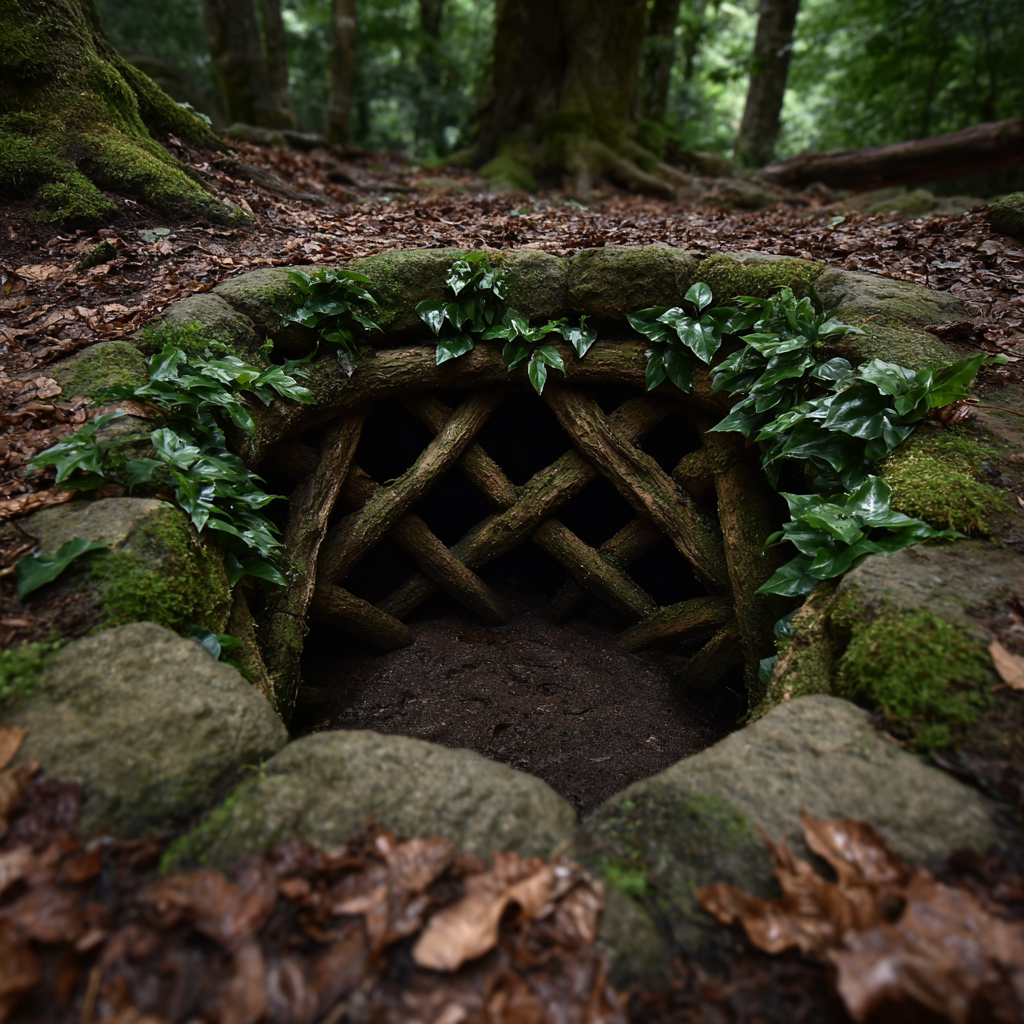
The Pitfall Paths are a defensive system of concealed capture traps placed only on routes that bypass main entrances, designed to immobilize infiltrators without causing serious harm. They acknowledge that not all who approach the settlement have peaceful intentions, while visitors who follow marked paths encounter nothing dangerous. Trespassers attempting stealth find themselves dropped into moss lined pits where they can be questioned. Approximately fifteen active pitfalls are maintained and distributed across likely infiltration routes based on terrain analysis and ranger experience. Each pit is about eight feet deep and six feet across, large enough for multiple people but difficult to escape, created by digging and druidic magic that compacts and stabilizes soil quickly.
The pit interiors are built for capture rather than injury, with thick moss, leaf litter, and soft earth cushioning the fall. There are no sharpened stakes, only smooth undercut walls that prevent climbing. Drainage holes stop rainwater from accumulating, avoiding drowning dangers. The pits are designed to be uncomfortable and humiliating, discouraging intruders who would rather avoid being found at the bottom of a hole. Concealment uses a framework of withes and branches that support leaf litter and debris, blending perfectly with the forest floor until the weight of a humanoid breaks through. Rangers refresh the coverings weekly, and dimensional magic accelerates aging and integration so new leaves quickly look natural.
Ethical rules for placement are strict. No pit is ever set on paths legitimate visitors might use. Main approaches are marked with carved posts showing a stylized oak tree, maintained and patrol checked to be safe. Those arriving openly find cleared, welcoming routes and help if needed. Pits are placed only on game trails, dense undergrowth, or paths that circle around entrances where someone would move to avoid being seen. This means someone captured has already shown suspicious intent through their chosen route. Even lost travelers tend toward marked paths, while only those deliberately avoiding them encounter the traps, which are then investigated for possible threats.
Warning systems protect residents and friendly visitors. Subtle markers known to locals indicate trap zones: patterns of three stones, stick arrangements, or moss shapes that look natural to outsiders. Orientation teaches residents these signs so they do not stray into danger. Rangers also keep detailed maps of pit locations, updating them when traps move. Before placement, rangers scout and document reasoning, gaining approval from leadership to ensure the trap serves no legitimate purpose and targets only those whose behavior already warrants scrutiny. This process maintains safety and ethical standards while allowing hidden defenses.
Rangers inspect traps daily from safe distances, usually discovering anyone caught within hours. Intruders are questioned, and many prove to be scouts, spies, or bandits, though sometimes a confused traveler has fled marked paths and fallen in. Those without hostile intent are helped out, treated for minor injuries, and escorted safely. The traps serve primarily as deterrent, as word spreads that the peaceful appearing grove is well defended. Those who still attempt infiltration often find themselves at the bottom of a pit, discouraged from hostile action and reminded that the settlement is not as vulnerable as it seems.
Benefits
The Pitfall Paths provide a passive defense system that captures intruders without requiring constant manning. Any creature attempting to infiltrate the settlement via unauthorized routes must succeed on a DC 16 Perception check to notice the concealed pits before stepping on them. Failure results in falling into a pit (1d6 nonlethal bludgeoning damage from the fall, cushioned by moss) and becoming trapped. Climbing out requires a DC 18 Strength (Athletics) check or appropriate climbing gear and assistance. Rangers check traps daily, ensuring any captures are discovered within 1d6 hours. This upgrade generates 1 Prestige, as while effective, some view such defenses as inconsistent with pure druidic ideals.