Description
Building upon the successful hazelnut and black walnut groves, the second phase of the Nut Orchards introduces two additional species that thrive in different zones of the grove. Chestnut trees, carefully selected for blight resistance, grow in the warmer areas of Autumn's Edge, their spiny burrs splitting open to reveal glossy brown treasures that are sweet and starchy, perfect for roasting or grinding into flour. Hickory trees with their shaggy bark stand tall among the oaks in the drier sections of the forest, their sweet nuts prized for both eating and oil production. These additions create a diverse and resilient orchard system that produces different nut varieties throughout the extended harvest season, ensuring that gatherers always have fresh crops to collect.
The dimensional magic of the grove intensifies across the expanded orchards, creating truly extraordinary productivity. Each mature tree now produces harvests every eight to ten days during peak autumn season rather than once per year, as if the trees experience multiple seasons compressed into a few months. This magical acceleration means that a single chestnut tree might drop three or four separate crops of nuts throughout the fall, while hickory trees continue producing sweet nuts week after week. The trees show no signs of stress from this enhanced productivity; instead, they appear vigorous and healthy, their leaves remaining green longer into autumn and their root systems thriving in the grove's enriched soil.
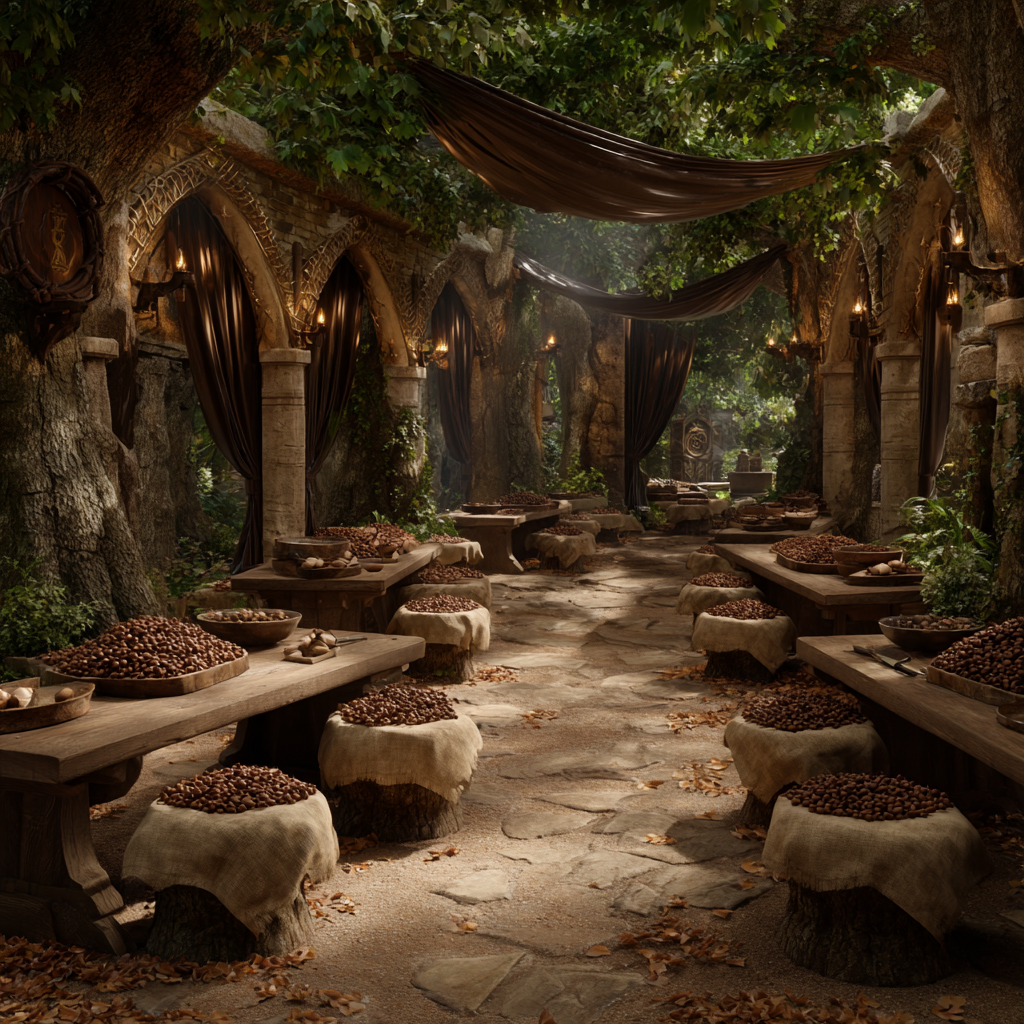
Processing facilities transform the orchards from simple gathering sites into centers of productive activity. Near each major orchard section, covered pavilions shelter long wooden tables where the Harvest Assistant and Orchard Keeper sort, clean, and prepare nuts for storage. Nutcrackers and picks hang from hooks, available for quality checks and immediate sampling. Drying racks allow chestnuts and hickory nuts to cure properly before long-term storage, preventing mold and ensuring optimal flavor. For black walnuts, specialized hulling equipment removes the thick green husks that stain hands and clothing, revealing the hard inner shells. The processing areas become gathering places where workers share techniques, trade stories, and develop efficient methods for handling each nut variety's unique requirements.
The expanded orchards create beautiful seasonal displays that enhance the grove's natural beauty. Spring brings the hickories' subtle flowers and the chestnuts' showy cream-colored catkins that stand upright like candles. Summer sees the developing nuts swelling in their protective coverings—chestnuts in spiny burrs, hickories in thick husks, hazelnuts in their papery sheaths, and walnuts in green jackets. Autumn transforms the orchards into treasure troves as nuts ripen and fall, their colors ranging from pale hazelnut brown to glossy chestnut mahogany to dark walnut shells. The community often gathers in the processing pavilions during evening hours to crack nuts together, the rhythmic crack-and-pick creating a meditative soundtrack while neighbors share news and prepare for winter.
Benefits
The Nut Orchards II produce an additional 300 gold per month in revenue through expanded species diversity and processing capabilities that ensure premium quality nuts command top prices. Like their precursor, these orchards generate 3 Prestige.