Description
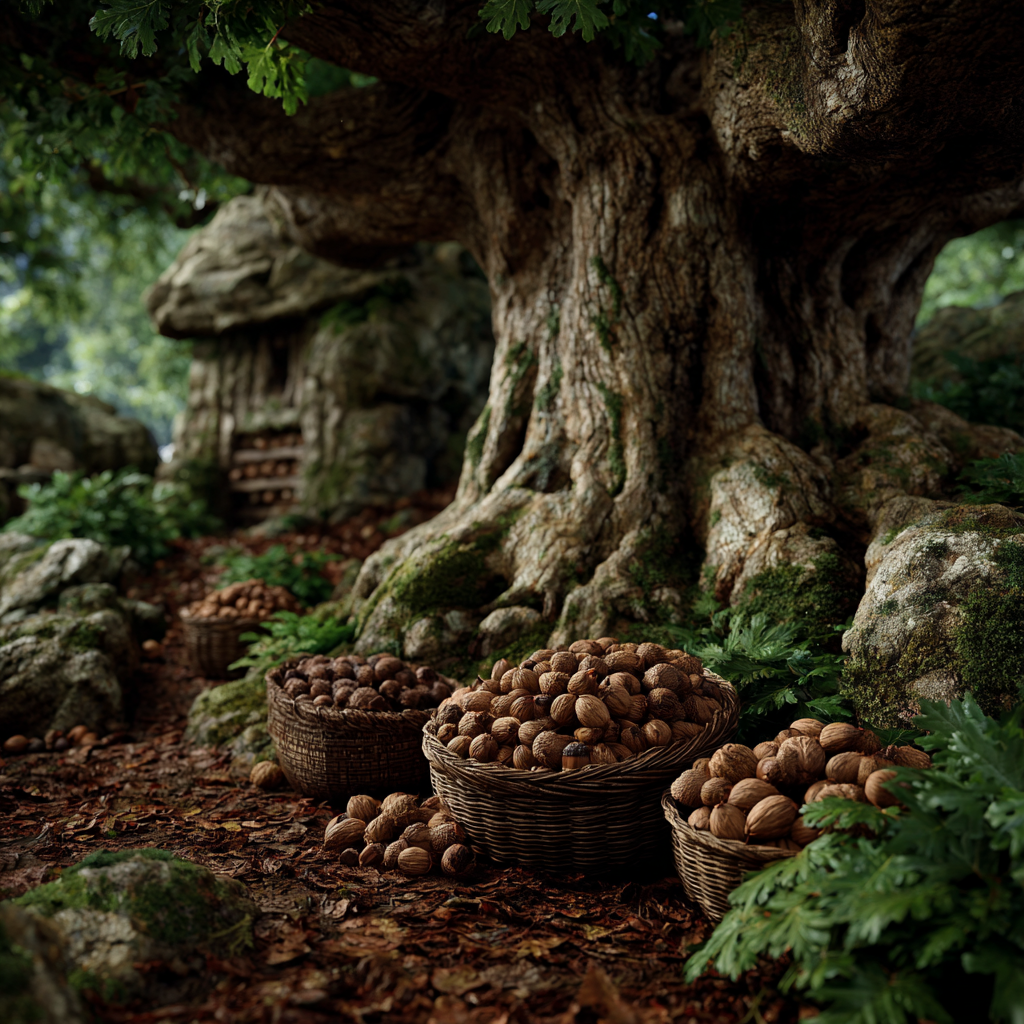
The Nut Orchards of the Elderwood Grove consist of carefully selected and positioned nut trees integrated seamlessly into the existing forest structure. Rather than clear-cutting areas to plant uniform rows, these orchards work with the natural landscape, filling in gaps in the canopy and establishing productive trees in locations where they can thrive without displacing the ancient growth. The result is a forest that appears untouched while secretly producing abundant harvests of nutritious nuts. Young trees are planted near their elder counterparts, learning from the established forest while contributing to the settlement's food security.
Multiple species create a diverse and resilient orchard system throughout different zones of the grove. Black walnut trees with their compound leaves and deeply furrowed bark occupy the richer soils near the Crystal Streams, their roots releasing compounds that shape the plant community around them into complementary partnerships. Hazelnut shrubs form productive understory thickets in the transition zones, their catkins dancing in spring breezes and their clusters of nuts ripening in papery husks each fall. Chestnut trees, carefully selected for blight resistance, grow in the warmer areas of Autumn's Edge, their spiny burrs splitting open to reveal glossy brown treasures. Hickory trees with their shaggy bark stand tall among the oaks, their sweet nuts prized for both eating and oil production. In the most protected microclimates, even almond trees manage to flourish, their early spring blossoms painting the forest with clouds of pink and white.
The orchards are designed with wildlife partnership as a core principle. While harvest areas are marked and tended, equally large sections are designated as wildlife zones where squirrels, deer, jays, and other forest creatures can gather nuts without interference. This deliberate sharing ensures that the forest's animal population thrives, storing nuts throughout the woodland and inadvertently planting the next generation of trees. The dimensional magic of the grove allows these typically slow-growing trees to reach productive maturity in just a few years rather than decades, and once mature, they produce multiple harvests throughout the fall season rather than a single annual crop. Each tree can be harvested every eight to ten days during peak season, creating a steady flow of fresh nuts over several months.
Harvest time transforms the orchards into hubs of community activity. Long poles with padded hooks allow gatherers to gently shake branches or knock down high nuts without climbing, while ground crews gather the fallen treasures into woven baskets. The distinctive thunk of falling nuts and the rustle of leaves create an autumn symphony, accompanied by the chatter of gathering crews and the scolding calls of squirrels asserting their territorial claims. Certain ancient oak trees, already centuries old when the settlement was established, drop prodigious quantities of acorns that are primarily left for the wildlife but can be processed into flour during lean times, connecting the settlement to the oldest food traditions of forest-dwelling peoples.
Processing areas near each orchard section feature long wooden tables in covered pavilions where fresh nuts are sorted, cleaned, and prepared for storage. Nutcrackers and picks hang from hooks, available for immediate sampling of the harvest. Drying racks allow nuts to cure properly before long-term storage, while stone grinding wheels stand ready to process nuts into meal, butter, or oil. The rich, earthy smell of fresh nuts fills the autumn air, and the community often gathers in the evenings to crack nuts together, share stories, and prepare for the winter months ahead. The orchards become living monuments to the patient wisdom of planting for future generations while providing abundant harvests in the present.
Benefits
The Nut Orchards produce 80 pounds of mixed nuts each month during harvest season (4 months per year in autumn). These nuts can be consumed fresh, stored for winter, or sold for 3 gold per pound (240 gold per month during season, 960 gold per year). The high protein and fat content makes them invaluable for winter provisions. Characters who consume a portion of fresh nuts as part of their daily rations gain a +1 bonus to Constitution saving throws for 24 hours due to the exceptional nutritional value. Additionally, 20 pounds of acorns are processed monthly during season for animal feed or emergency flour. This upgrade generates 3 Prestige.