Description
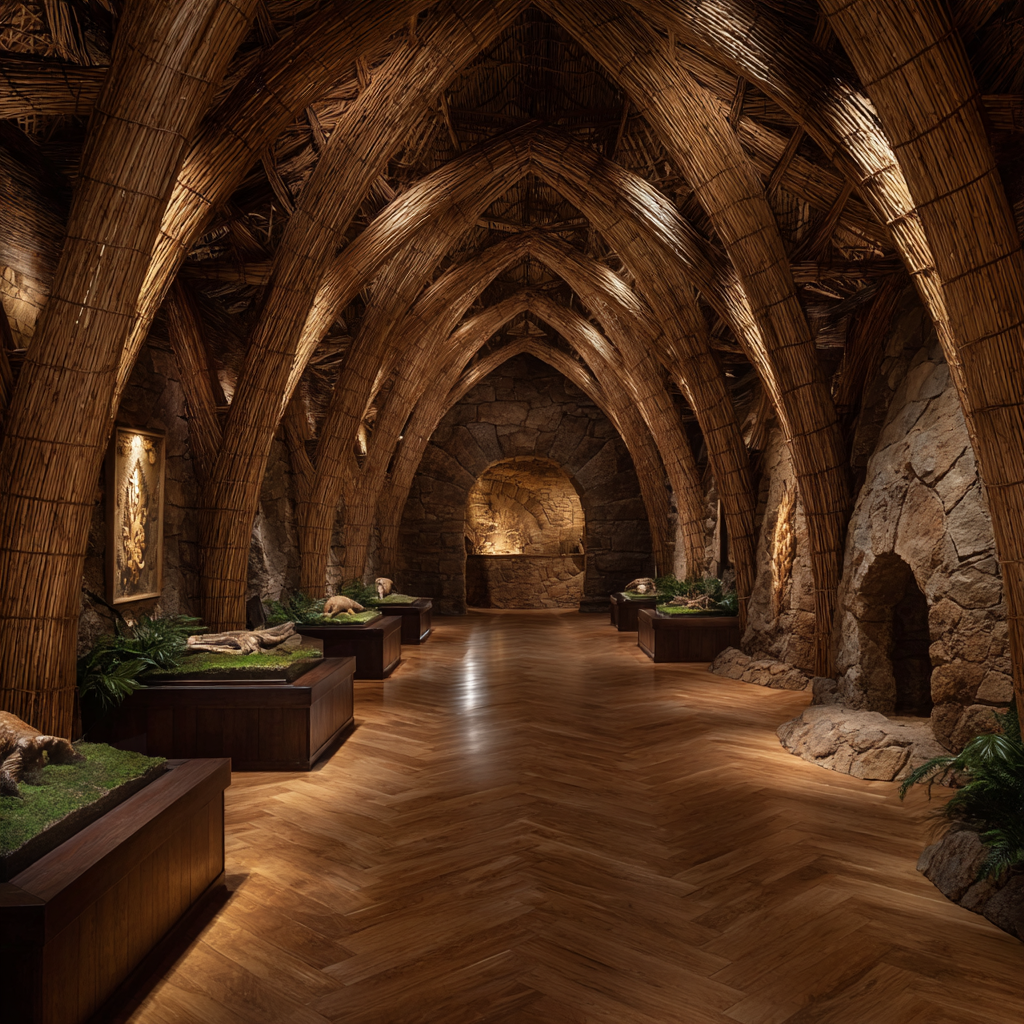
The Naturalist's Collection occupies a spacious building constructed through guided growth, where a circle of mature willow trees have been encouraged to bend inward and weave their branches together, creating a domed structure with naturally arched walls. The willows remain living and healthy, their roots drawing water from a small stream that runs alongside the building, while their woven branches form a weatherproof shell that is both beautiful and functional. Large windows have been left open in the weaving, covered with thin sheets of treated linen that allow soft, diffused light to enter while protecting the interior from rain and excessive sun that might damage delicate specimens. The entrance is framed by two ancient oak posts recovered from a tree that fell naturally in a long-ago storm, carved with intricate reliefs depicting the seasonal cycle of the forest. Stepping through this doorway feels like entering a cabinet of wonders, where every surface holds something fascinating to observe and contemplate.
The interior is organized into distinct exhibition areas, each focusing on a different aspect of the forest's natural history. The western section is devoted to geology and minerals, displaying stones and crystals found throughout the Elderwood Grove arranged on shelves of polished wood. Here visitors can examine the layered sedimentary rocks that form the stream beds, the granite boulders left by ancient glaciers, samples of different soil types each labeled with notes about what plants thrive in them, and particularly beautiful examples of quartz crystals that sometimes form in hollow logs. A large relief map carved from wood shows the topography of the entire grove, helping visitors understand how elevation, water flow, and sun exposure create the different micro-environments that support varied plant and animal communities. The northern section houses the botanical collection, featuring pressed flowers mounted behind mica sheets, cross-sections of tree trunks showing growth rings and explaining what they reveal about past weather patterns, bark samples from every tree species in the grove, and detailed drawings of root systems that normally remain hidden underground. Several living terrariums maintain small ecosystems under glass, allowing visitors to observe moss gardens, fern grottos, and mushroom colonies up close without disturbing their natural habitats.
The eastern section contains the zoological displays, which are handled with particular care to ensure that no animals are harmed for the sake of the collection. All mounted specimens come from creatures that died naturally or were found already deceased, their bodies respectfully preserved through traditional taxidermy techniques to honor their forms and teach visitors about anatomy, adaptation, and behavior. A magnificent spectral stag mount, created from one that passed peacefully of old age, stands in a place of honor, its preserved form still radiating a sense of nobility and grace. Display cases hold collections of shed antlers showing growth patterns, molted bird feathers arranged by species and demonstrating the variety of colors and patterns found in the grove, abandoned nests showcasing different architectural techniques, and carefully preserved eggs and egg shells from various bird species, all collected only after the nests were no longer in use. Small mammals are represented by casts made from tracks pressed into clay, allowing visitors to compare the paw prints of foxes, rabbits, squirrels, and other common creatures. An extensive collection of insect specimens preserved in resin shows the incredible diversity of beetles, butterflies, moths, and other arthropods that inhabit the forest, each one pinned and labeled with information about its role in the ecosystem.
The southern section is dedicated to curiosities and phenomena, those unusual and remarkable finds that spark wonder and questions. Here visitors encounter a massive mushroom cap preserved through special drying techniques that maintained its vivid purple color, antlers from a deer that grew in an unusual forked pattern creating a natural crown shape, a hollow log that contains a perfectly preserved bee hive abandoned years ago, its hexagonal cells still visible and beautiful, and a section of bark that lightning carved into a spiral pattern when it struck a tree. Glass bottles contain examples of different types of sap and resins, each labeled with its properties and uses in healing or crafting. A series of skulls from various animals, all found naturally after death, are arranged to show comparative anatomy and how different creatures have adapted to different diets and lifestyles. Perhaps most impressive is a small collection of fragments from the earthen ring that orbits Xeres, meteoric stones that fell as glowing fireballs and were recovered shortly after impact, their surfaces still showing signs of their fiery passage through the atmosphere, valued both as rare specimens and as tangible connections to the cosmic forces that influence the world below.
The Naturalist's Collection serves multiple purposes within the community, functioning as museum, classroom, and inspiration all at once. School groups from the Apprentice Grove regularly visit for lessons in biology, ecology, and natural history, with instructors using the displays to illustrate concepts that might otherwise remain abstract. Young children press their faces against the glass cases, marveling at the colors of butterfly wings or trying to count the rings in a tree cross-section. Scholars from the Lorekeeper's Library consult the collection when researching specific species or phenomena, treating it as a three-dimensional reference library where information is stored in physical form rather than on bark scrolls. Visitors from outside the settlement often tour the collection, gaining appreciation for the incredible biodiversity of the Elderwood Grove and understanding why its preservation is so important. The curators who maintain the collection are constantly adding new specimens, always with respect and never through harm, watching for natural deaths, shed materials, and unusual finds that might teach something new about the forest. They also rotate displays seasonally, bringing forward specimens that are particularly relevant to current conditions, such as highlighting hibernation adaptations during winter or showcasing pollinator relationships during the spring bloom. The collection grows slowly but steadily, each addition carefully documented and integrated, creating an ever-expanding archive of natural knowledge that serves both current citizens and future generations.
Benefits
The Naturalist's Collection provides educational resources for understanding the natural world. Any character who spends at least 1 hour studying specific displays here gains a +2 circumstance bonus on their next Knowledge (nature) check related to the subject they studied (plants, animals, geology, or weather patterns) made within 24 hours. The collection also grants a +2 bonus on any Craft checks made to work with natural materials (wood, leather, bone, fiber) as craftspeople study how nature has shaped these materials and learn from its designs. Once per week, a character can spend 2 hours researching here to gain advantage on their next Handle Animal or Survival check as they study animal behavior and adaptation strategies. The facility generates 3 Prestige, reflecting the settlement's dedication to understanding and celebrating the natural world.