Description
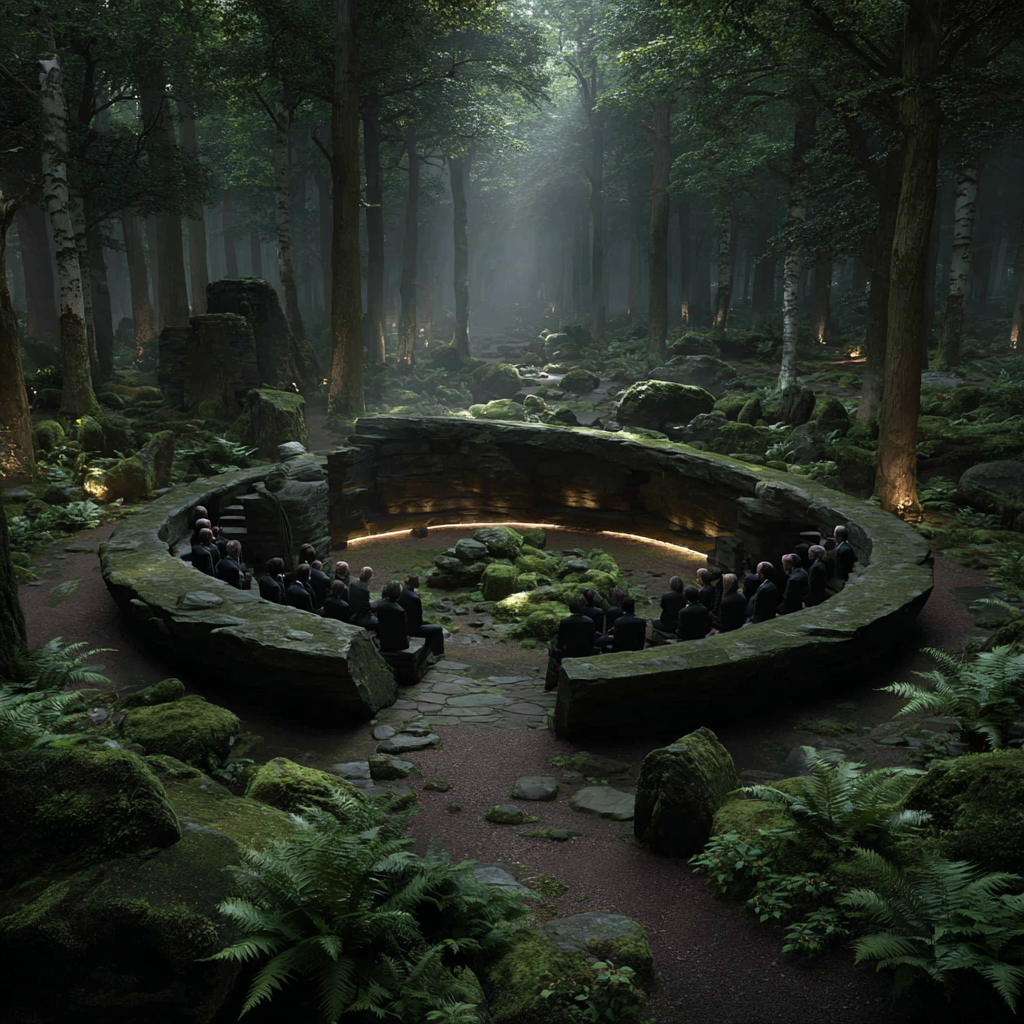
The Musician's Grove occupies a quarter-mile stretch of forest where the dimensional magic of Elderwood has been used to encourage specific tree growth patterns that create natural acoustic chambers. The centerpiece is a circular arrangement of nine mature ash trees whose trunks curve slightly inward, forming a bowl shape that reflects and focuses sound toward the center while preventing echoes from becoming muddy or chaotic. The ground within this central chamber is carpeted with soft moss that absorbs excess reverb, while the canopy overhead creates a sound-reflecting dome that gives even whispered notes surprising clarity and presence. Druids spent months singing to these trees and guiding their growth, shaping them into living instruments that respond to music by subtly vibrating in sympathetic resonance, adding warmth and depth to any sound produced within their embrace.
Surrounding the central chamber, a network of smaller practice alcoves takes advantage of natural acoustic phenomena created by specific tree arrangements and terrain features. A small amphitheater formed by a natural depression and backed by dense hemlock growth provides perfect conditions for vocal practice, with sound projecting forward while the evergreens absorb backscatter that would otherwise create confusion. A hollow created where three massive oaks grew together produces cathedral-like reverb ideal for sustaining instruments like flutes and horns, their notes hanging in the air for seconds after being played. A tight cluster of birch trees creates a bright, articulate space perfect for percussive instruments, their pale bark reflecting higher frequencies cleanly. Each alcove naturally suits different instruments or ensemble sizes, and musicians quickly learn which spaces best serve their needs.
The practice spaces are furnished simply but thoughtfully, with amenities that support extended rehearsal sessions without imposing artificial structures that would dampen the natural acoustic properties. Smooth log benches positioned at optimal listening points provide seating for musicians and their instructors or accompanists. Wooden music stands carved from fallen branches hold sheet music or bark scrolls bearing original compositions. Weatherproof storage chests built into hollow tree trunks protect valuable instruments from moisture during overnight storage, with each musician provided a secure compartment accessible by personal key. Covered pavilions woven from living willow branches offer shelter during rain without creating enclosed spaces that would alter the acoustic environment. Small clearings between practice areas provide buffer zones where different musicians can work simultaneously without their sounds clashing, the strategic placement of sound-absorbing thickets of ferns and rhododendrons preventing interference.
The grove operates on an informal reservation system coordinated by a resident musician who maintains a schedule carved into a large wooden board near the entrance. Musicians sign up for specific alcoves during desired time blocks, ensuring everyone has access to their preferred spaces without conflicts. Morning hours tend toward individual practice as musicians warm up their voices or work through challenging passages alone. Afternoons see more ensemble rehearsals as groups come together to blend their sounds. Evenings often feature informal jam sessions where multiple musicians gather in the central chamber to improvise together, creating spontaneous concerts that occasionally draw appreciative audiences of residents out for evening walks. The flexible system respects the needs of serious practitioners while remaining open enough for casual players to participate without feeling excluded or intimidated.
Beyond its practical function as rehearsal space, the Musician's Grove becomes a hub for musical education and collaboration. Experienced musicians offer lessons to students in the smaller alcoves, the natural acoustics making it easy to hear and correct subtle mistakes in technique or tone. Visiting bards and minstrels often request access to practice new material before performing at the Bard's Branch, using the grove's honest acoustic environment to refine their arrangements. Instrument makers test their creations here, knowing the space will reveal both strengths and flaws in their work. Composers seek inspiration in the forest sounds that blend with their experiments, incorporating bird songs, wind through leaves, and distant streams into their compositions. The grove fosters a thriving musical culture within the settlement, raising the overall quality of performance art while providing a peaceful retreat where musicians can focus entirely on their craft without the pressures of audience or the distractions of daily life.
Benefits
The Musician's Grove generates 25 gold per month from instruction fees paid by students learning from resident masters. The space can also be reserved for intensive rehearsals by visiting performers. More significantly, any character who practices in the grove for at least 4 hours per week gains a +1 bonus to all Perform checks as the exceptional acoustics help them hear and correct subtle imperfections in their technique. All financial generators in the grove earn 5% higher prices due to verified quality. The musical culture fostered here attracts talented performers to the settlement. This upgrade generates 4 Prestige.