Description
The Mushroom Cellar begins as a natural cave system discovered during the initial exploration of the Elderwood Grove, a network of limestone chambers formed over millennia by underground water flow that left behind smooth walls, stable ceilings, and perfect humidity. Goodberry has expanded these natural caverns into an interconnected complex spanning nearly three acres underground, with the main entrance located at the base of a moss-covered hillside where ancient tree roots have created a natural archway into the earth. A wide ramp of packed earth reinforced with wooden planks descends at a gentle angle, allowing even those carrying heavy loads to navigate safely into the depths. The ramp walls are lined with softly glowing lichen that Goodberry has cultivated specifically for this purpose, providing dim but reliable illumination that never fades and requires no maintenance. The air in the descent tunnel is cool and slightly humid, carrying the rich, earthy smell of healthy soil and growing fungi, a scent that most find pleasant and which immediately communicates the cellar's purpose to anyone entering.
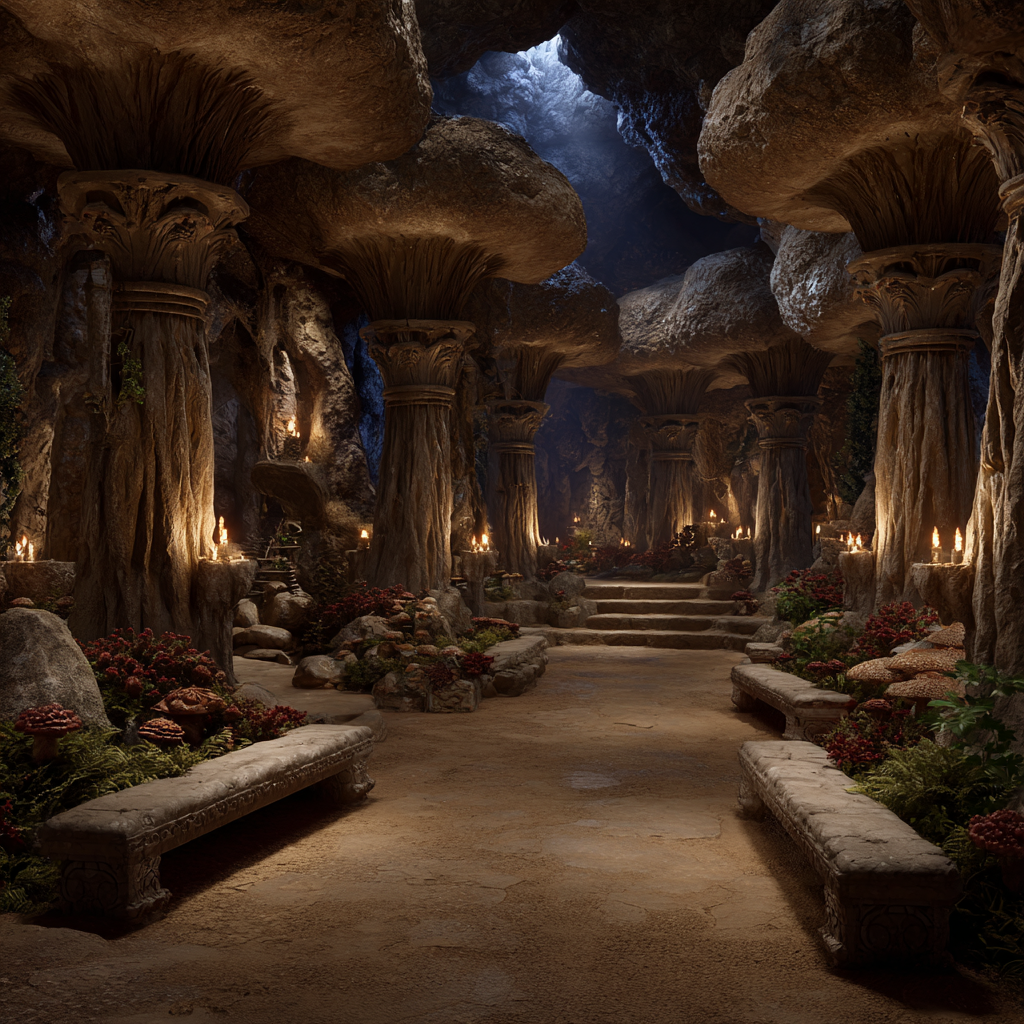
The main cultivation chamber is vast and cathedral-like, with a ceiling that arches twenty feet overhead and natural stone pillars left in place during excavation to support the weight above. The floor has been leveled and covered with a carefully mixed substrate of composted leaves, rotted wood, and mineral-rich soil brought from different parts of the grove, creating an ideal foundation for fungal growth. Throughout this chamber and the dozens of smaller rooms branching from it, raised beds of varying compositions host hundreds of different mushroom species. Some beds are rich with oak wood chips for shiitake cultivation, others are filled with straw and manure for common button mushrooms, while still others contain specialized mixtures designed to support rare and exotic varieties like ghost mushrooms that glow with pale blue light, singing mushrooms whose caps vibrate to produce haunting musical tones when mature, and the incredibly valuable dragon's breath mushrooms whose spores can be processed into powerful fire resistance potions. Each cultivation bed is carefully labeled with wooden markers identifying the species, planting date, and expected harvest time, creating a living library of fungal diversity that represents years of collection and experimentation.
The cellar's environmental controls are a masterwork of natural magic and careful engineering. Humidity is maintained at optimal levels through a combination of underground springs that Goodberry has channeled into shallow troughs running along the walls and ceiling vents positioned to allow just enough air exchange to prevent stagnation without creating drying drafts. Temperature remains stable year-round at the perfect range for mushroom cultivation, the earth itself providing natural insulation against seasonal extremes while subtle warming enchantments prevent any risk of freezing during the deepest winter. Different chambers maintain different conditions suited to their specific crops: some are kept slightly cooler for arctic varieties, others warmer and more humid for tropical species, and a few are maintained in near-total darkness for fungi that evolved in the deepest caves and cannot tolerate even trace amounts of light. Water for irrigation is collected from the underground springs and stored in stone cisterns before being distributed through a network of channels and clay pipes, ensuring every growing bed receives precisely the moisture it needs without becoming waterlogged or allowing harmful bacteria to flourish.
The most remarkable aspect of the Mushroom Cellar emerged not from its construction but from what it attracted. Within weeks of the cellar's completion, the first myconids appeared, peaceful fungal beings who exist as a bridge between the plant kingdom and something approaching sentient thought. These creatures, standing between three and five feet tall and resembling walking mushrooms with humanoid shapes, communicate not through speech but through clouds of spores that convey emotions, images, and simple concepts to those who breathe them in. They arrived drawn by what they perceived as a great honoring of fungal life, a temple built to celebrate their kind and the countless varieties of mushrooms that share their fundamental nature. The myconids asked permission to stay through their spore communication, projecting feelings of peace, gratitude, and a desire to help tend this magnificent garden. Duke Hotaru granted that permission immediately, and the myconids have since become the cellar's most dedicated caretakers and its most valuable resource. They possess an innate understanding of fungal biology that surpasses any mortal knowledge, able to sense which beds need more water, which are ready for harvest, which are developing disease and require intervention. They work tirelessly but joyfully, treating each mushroom variety with reverence and care, and their presence has accelerated growth rates and improved yields beyond anything initially projected.
The myconids have established their own living spaces in the deepest chambers of the cellar, areas they have modified with Goodberry's permission to better suit their needs. These chambers feature thick carpets of mycelium, the underground fungal networks that serve as something like nervous systems for mushroom colonies, and which myconids can directly interface with to communicate across distances and share nutrients. The myconids sleep standing in small alcoves, their bodies entering a state of dormancy that outsiders might mistake for simple mushrooms growing from the floor until movement reveals their true nature. They have created a communal gathering space where they perform what appears to be worship, releasing coordinated clouds of spores that create temporary visions in the air, beautiful and ephemeral art pieces that celebrate the cycle of growth, decay, and renewal that defines fungal existence. Visitors who witness these ceremonies and breathe the spore clouds report profound feelings of connection to nature and an enhanced understanding of the role decomposition and fungi play in forest health. The myconids welcome such visitors but request they approach with respect and quietness, as their ceremonies are sacred even if they appear strange to surface dwellers.
Benefits
The Mushroom Cellar generates 200 pounds of high-quality edible mushrooms per month, worth approximately 100 gold per week when sold or providing nutritious food for settlement residents. The resident myconids (1d4+1, rolled once when cellar is completed) provide exceptional cultivation knowledge, granting a +3 bonus to all Profession (farmer) checks related to fungi and a +2 bonus to Craft (alchemy) checks when working with mushroom-based ingredients. Once per day, the myconids can release rapport spores in a 20-foot radius that automatically calm hostile creatures (Will DC 15 negates), providing a non-violent defensive option. The myconids also serve as expert decomposers, able to rapidly break down organic waste throughout the settlement, reducing disease risk and creating high-quality compost. The cellar generates 6 Prestige, reflecting both the settlement's sophisticated agricultural practices and its reputation as a place where even fungal beings find welcome and purpose.