Description
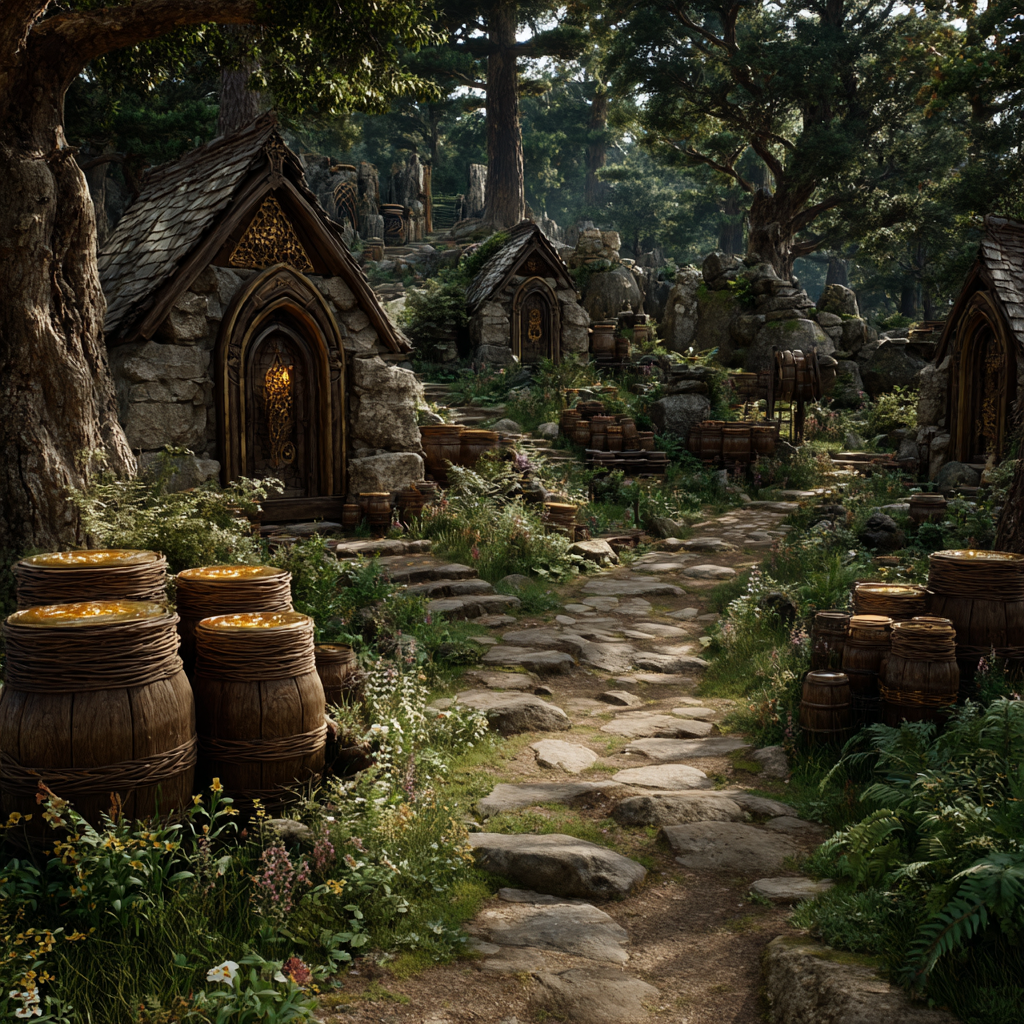
The first Honey Glades consist of three carefully selected forest clearings where flowering plants grow in natural profusion and sunlight penetrates the canopy to create warm, sheltered microclimates ideal for bee colonies. Rather than imposing artificial hive boxes in rigid rows, the Master Beekeeper and Hive Tender work with the bees' natural preferences, providing hollow log hives and woven skeps that blend seamlessly with the forest environment. Some hives occupy natural cavities in ancient trees, with the bees' permission secured through patient observation and offering of favorable conditions. Each colony site is chosen for its proximity to diverse nectar sources, protection from harsh weather, and access to clean water from the Crystal Streams. The hives are painted in earth tones or left natural, often decorated with carved protective symbols that honor both the bees and the forest spirits said to watch over them.
The dimensional magic of the grove begins to affect these foundational colonies in subtle but noticeable ways. The bee colonies grow stronger than their outside counterparts, with queens laying more eggs and workers living healthier lives. The accelerated bloom cycles of nearby flowers mean nectar sources are available for extended periods rather than in brief windows, allowing bees to forage productively throughout longer seasons. The bees produce harvestable honey stores every month to six weeks rather than the typical seasonal harvest, yielding impressive amounts of honey without stressing the colonies or depleting their winter stores.
Two primary varieties of honey emerge from these initial glades. Early spring honey, drawn primarily from fruit tree blossoms and wildflowers, is pale gold and delicately floral with notes of apple blossom and violet. Summer honey from the wildflower meadows is amber and rich, with complex flavor notes of clover, wild rose, and forest herbs. Each variety is carefully labeled and stored separately, beginning what will become a honey library showcasing the grove's botanical diversity.
The beekeepers practice gentle, sustainable harvesting methods that prioritize colony health over maximum extraction. They harvest only surplus honey, always leaving ample stores for the bees themselves. Smoke from burning herbs calms the bees during inspections without drugging them into lethargy. The harvest process becomes a meditative practice, requiring patience, gentle movements, and deep respect for the colonies being tended. Protective veils and gloves are used minimally, as the beekeepers develop relationships with their charges that reduce defensive behavior.
Benefits
The Honey Glades I produce premium spring and summer honey that generates 400 gold per month in revenue. The initial colonies establish the foundation for the grove's pollinator network. These glades generate 2 Prestige.