Description
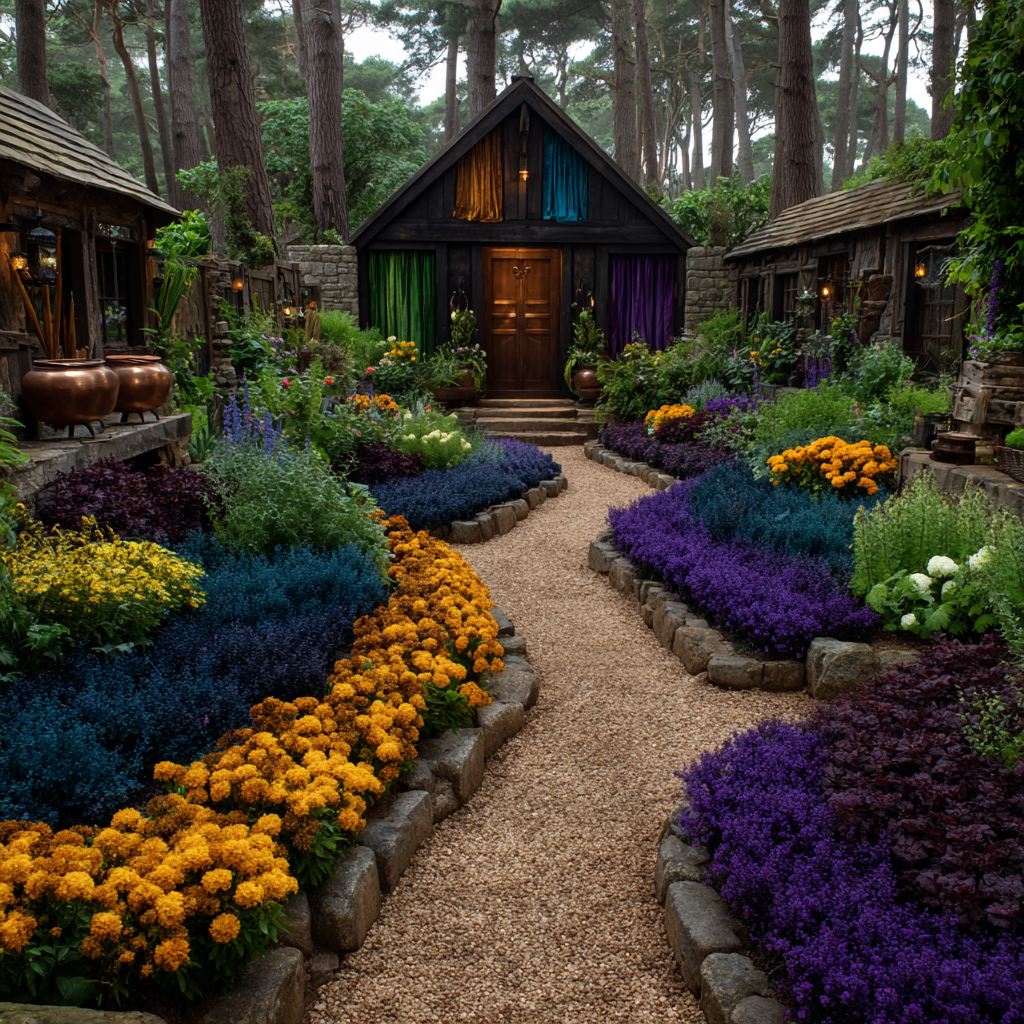
The Dyer's Garden sprawls across several terraced plots in Autumn's Edge, where sunlight reaches the forest floor for extended periods and the soil has been carefully enriched to support the demanding needs of dye plants. The garden is organized by color family, with each section dedicated to plants that produce similar hues, making it easier to manage harvest times and processing schedules. A low fence woven from living willow shoots surrounds the entire area, marking the boundaries while remaining in harmony with the forest aesthetic. Gravel paths wind between the planting beds, providing easy access for tending and harvesting without compacting the soil. A charming work shed built from bark panels stands at the garden's center, its exterior painted with samples of every color the garden produces, creating a living advertisement of the dyer's art.
The blue section of the garden is dominated by carefully tended woad plants, their leaves ready for the complex fermentation process that yields indigo dye. Though true indigo is not native to the Elderwood Grove, clever cultivation and the accelerated growth properties of the dimensional bubble have allowed the dyers to establish thriving patches that produce the deep, rich blues so prized for fine clothing. Alongside the woad grow elderberries, whose dark fruits create softer purplish-blues, and cornflowers that provide delicate sky-blue tints. The yellow beds burst with color during the growing season, featuring golden coreopsis, bright marigolds, and tall stalks of weld, one of the most reliable yellow dye plants known. These flowers bloom in succession, ensuring a steady supply of fresh material throughout the warm months.
The red and pink section showcases madder root, perhaps the most valuable plant in the entire garden. The madder beds require three years to reach maturity under normal conditions, but the magical properties of Elderwood Grove reduce this to mere months, allowing for multiple harvests where other dyers might wait years. The roots, when properly processed, yield everything from pale pinks to deep burgundy reds depending on the mordant used. Pokeweed grows in a carefully contained area, its toxic berries producing vibrant magenta dyes when handled with proper care and knowledge. Wild roses contribute their petals for delicate pinks, while their hips provide additional dye material and medicinal benefits. Brown and black tones come from a dedicated section where walnut trees drop their hulls, oak galls are harvested from specific trees, and sumac berries are gathered for tannish browns. A small stand of black walnut saplings promises future harvests of the deepest, richest browns imaginable.
The processing area within the work shed is a marvel of organized efficiency. Large copper kettles hang over stone fire pits, their size allowing for dyeing entire bolts of cloth or multiple hides at once. The kettles are carefully maintained, as the metal itself affects the final color of certain dyes. Smaller ceramic pots line wooden shelves, each containing different mordants and modifiers: alum for brightening colors, iron for deepening and dulling tones, copper for shifting hues toward green, and tin for enhancing brilliance. Dried plant materials hang from the rafters in labeled bundles, organized by harvest date and potency. A large work table dominates the center of the space, its surface stained with decades worth of colorful splashes, each mark a testament to successful dye batches. Here, fresh plant materials are chopped, crushed, or ground in preparation for the dye pot.
The drying yard behind the shed features long poles stretched between posts, creating lines where newly dyed materials can hang in the dappled sunlight to dry and set their colors. A small library of hand-written journals documents every successful dye recipe, noting the plants used, mordants applied, temperatures maintained, and the resulting colors achieved. This accumulated knowledge represents years of experimentation and is jealously guarded as the dyer's most valuable asset. The garden produces dyes for every conceivable need: brilliant colors for ceremonial garments, subtle earth tones for everyday clothing, vibrant hues for decorative banners and wall hangings, and specialized pigments for artists working in paint or ink. The dyers take pride in using only natural, forest-sourced materials, refusing to import synthetic dyes even when offered. Their work ensures that everything crafted in Elderwood Grove can be as colorful and beautiful as nature itself, all while maintaining perfect harmony with the forest's principles of sustainability and respect for the natural world.
Benefits
The Dyer's Garden produces an extensive range of natural dyes and pigments. The garden generates 250 gold worth of dye materials each month. Additionally, the dyers maintain a stock of pre-made dyes in standard colors available to settlement crafters at market price, supporting the broader artistic and crafting economy. Any textile or leather item dyed with materials from this garden retains its color 50% longer than typical natural dyes, resisting fading from sunlight and washing. Once per season, the garden produces a rare pigment of exceptional quality (roll 1d6: 1-2 brilliant red, 3-4 deep indigo blue, 5 forest green, 6 royal purple) worth 50 gold that can be used for masterwork items or sold. This upgrade generates 3 Prestige.