Description
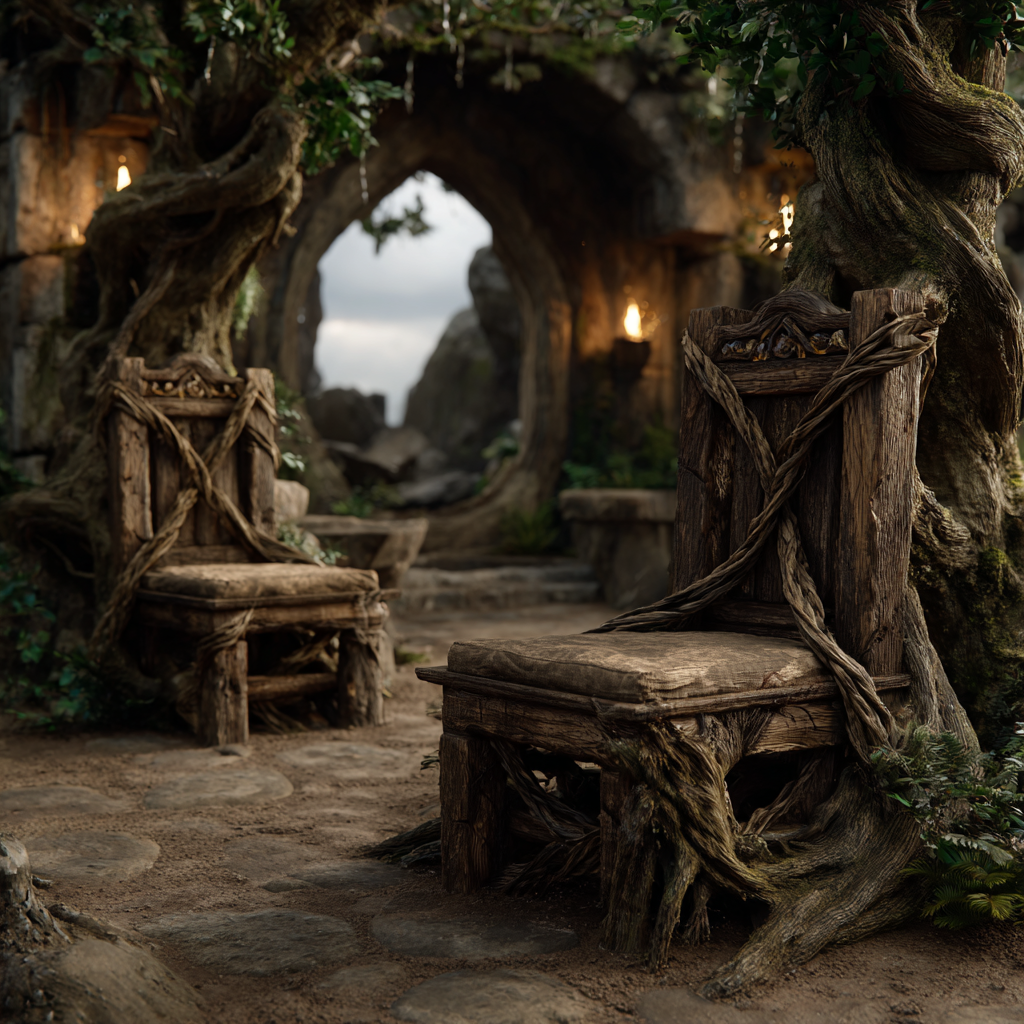
The Living Furniture grove occupies a sunlit clearing near the settlement's center, where carefully spaced young trees of various species grow in organized rows and clusters. Unlike traditional tree cultivation aimed at producing timber, these saplings are destined to become functional objects while remaining rooted in the earth and fully alive. The grove resembles an outdoor workshop where wood and life intertwine, with trees in various stages of transformation creating a surreal landscape of half-formed chairs growing beside nearly complete tables, shelving units sprouting from willing willows, and bed frames emerging from the guided growth of flexible maples. Small markers at the base of each project identify the artisan responsible, the intended final form, the species being shaped, and the estimated completion date. Winding paths between the growing furniture allow visitors to observe the transformation process, though touching the works in progress is strictly forbidden as even minor disturbances can disrupt years of careful shaping.
The shaping process begins with careful species selection based on the desired furniture piece and its intended use. Willow, with its rapid growth and extreme flexibility, serves best for flowing decorative pieces, shelving, and curved chair backs. Oak provides strength and longevity for load-bearing furniture like tables, benches, and structural elements. Maple offers fine grain and moderate flexibility for elegant pieces requiring both beauty and durability. Cherry and walnut create luxury items prized for their rich colors and grain patterns. Young saplings barely a year old are transplanted to the grove and immediately begin their transformation journey. Master shapers visit each tree daily, using a combination of physical training techniques and gentle druidic magic to guide growth in specific directions. Flexible branches are bent and secured to frames that define the desired final shape, held in position by soft cloth ties that are adjusted regularly as the wood thickens. Growth nodes are encouraged or suppressed through careful application of plant hormones derived from natural sources, directing the tree's energy toward useful branches while preventing unwanted growth. The dimensional magic of Goodberry's bubble accelerates this normally decades-long process dramatically, reducing the five to ten years typically required to just six to twelve months for most pieces.
The workshop building adjacent to the grove houses the tools, materials, and planning spaces essential to the craft. Large wooden tables display detailed sketches and clay models of proposed furniture pieces, showing every curve, joint, and surface from multiple angles. These planning documents are crucial, as living furniture cannot be easily modified once the tree commits its growth pattern. Shelves hold the specialized tools of the trade: soft measuring tapes that won't damage bark, gentle pruning shears for removing excess growth, collection bottles for growth hormones and suppressants, bolts of soft cloth for securing training frames, and pigments for marking growth points on the bark. A library of pattern books documents successful designs from previous years, noting which species worked best, what challenges arose during shaping, and how long each piece required to reach completion. Apprentices study these records extensively before attempting their first simple pieces, typically starting with basic shelves or stools that require minimal complex shaping. The workshop also contains a magical preparation chamber where druids perform enhancement rituals on nearly complete pieces, infusing them with permanent enchantments that reinforce their structure, enhance their natural self-repair abilities, and imbue them with subtle responsive qualities that make them more comfortable and useful for their owners.
Completed furniture pieces present an extraordinary sight. A living chair consists of a trunk that divides at ground level, its main stem curving upward and backward to form the seat back while side branches sweep around to create armrests. The seat itself is formed from horizontal branches that have been coaxed to grow closely together and fuse where they meet, creating a living lattice strong enough to support weight yet comfortable due to the wood's slight natural flex. The entire piece remains rooted, drawing water and nutrients from the soil, its leaves providing shade to the sitter while photosynthesizing to support the tree's health. Tables feature flat surfaces grown from carefully aligned branches that fuse into single continuous planes, their edges smooth from growth shaping rather than saw marks. Legs consist of thick vertical stems or roots that provide rock-solid stability. Shelving units grow as ladder-like structures with multiple horizontal levels, each shelf capable of bearing substantial weight and actually strengthening over time as the tree continues to thicken. Beds present perhaps the most impressive examples, with head and foot boards grown as vertical elements while side rails extend between them, all remaining attached to their root system and drawing life from the earth beneath. The accelerated growth within the grove means these pieces reach full functionality far faster than natural growth would allow, with small items completing in just three to four months and even complex multi-piece sets finishing within a year.
The guild of furniture shapers maintains strict quality standards and ethical guidelines for their craft. Every piece must be grown with the tree's consent, secured through druidic communication that ensures the tree understands and accepts its role. No tree is forced into a shape that would cause lasting harm or prevent it from thriving in its new form. Completed pieces receive ongoing care, with guild members visiting regularly to prune excess growth, treat any diseases, and ensure the furniture remains healthy and functional. Customers who commission living furniture agree to basic stewardship responsibilities, providing their pieces with adequate water during dry periods and protecting them from damage. The guild maintains detailed records of every piece created, including its location, current condition, and any special care requirements. A yearly festival celebrates the craft, displaying the guild's finest works and honoring both the artisans who shape the wood and the trees that willingly transform to serve the community. The festival includes competitions for apprentices, demonstrations of advanced techniques, and auctions of newly completed pieces, with proceeds supporting the guild's operations and ongoing research into new shaping methods and species applications.
Benefits
The Living Furniture grove produces furniture pieces (chairs, tables, shelves, beds, and decorative items), which can be used to furnish settlement buildings or sold for premium prices. The workshop generates average monthly income of 500 gold from sales after accounting for pieces retained for settlement use. Living furniture provides unique benefits to owners: pieces heal minor damage on their own within 1d4 days, never rot or decay, actually improve in strength and stability over their first decade of growth, and create a calming natural atmosphere that grants residents a +1 bonus to saving throws against fear and stress-related effects when in homes furnished primarily with living pieces. The furniture can be customized with growing flowers, fruit-bearing branches, or aromatic herbs woven into the design, providing both aesthetic beauty and practical benefits. Buildings furnished entirely with living furniture generate +1 additional Prestige beyond their base value due to the exceptional craftsmanship and harmony with nature they demonstrate. This upgrade generates 12 Prestige, representing the settlement's mastery of one of the most refined and patient forms of druidic art.