Description
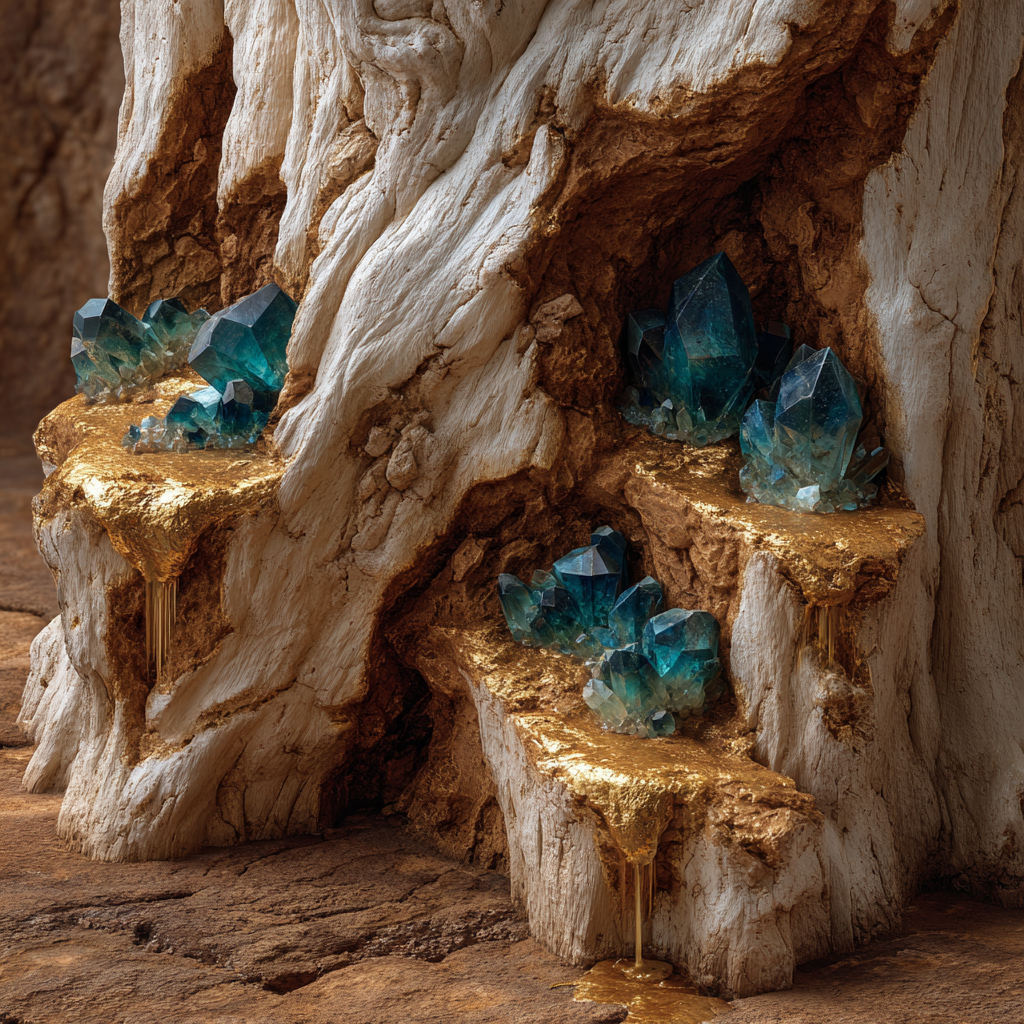
The Crystal Sap Collectors consist of fifty coniferous trees scattered throughout the Ancient Heart and Mossglow Hollow, positioned in locations where natural magical energies flow most strongly through the earth. The selected trees are primarily ancient white pines and silver firs, species chosen for their naturally abundant resin production and their compatibility with the transmutation enchantments required for crystallization. Each tree has undergone a year-long transformation process involving both druidic plant-shaping and arcane transmutation rituals, fundamentally altering their sap's chemical and magical composition so that when the viscous resin contacts air, it begins an immediate crystallization process that converts organic compounds into inorganic gemstone structures. The trees themselves appear largely normal from a distance, though closer inspection reveals distinctive features: their bark exhibits a faint crystalline shimmer, especially around old wounds or naturally occurring resin wells, and their needles carry a slight prismatic quality that creates tiny rainbows when sunlight passes through at certain angles. The most dramatic evidence of their transformation becomes visible on the trunk, where previous tapping points display clusters of small gemstone formations, like natural geodes that have grown directly from the living wood, their faceted surfaces catching light and throwing colored reflections across the surrounding bark.
The crystallization process represents a remarkable marriage of natural biology and transmutation magic. Normal tree resin serves as a defensive mechanism, sealing wounds and preventing disease or pest infiltration through its antiseptic properties and physical barrier formation. The enchanted trees retain this defensive capability, but their altered sap contains high concentrations of dissolved minerals drawn from deep soil deposits through enhanced root systems that extend far deeper than normal, reaching mineral-rich layers that ordinary trees cannot access. When tapped, the sap flows thick and golden, appearing much like ordinary pine resin but containing suspended particles that shimmer and catch the light, hinting at its transformed nature. Upon exposure to air, the transmutation magic embedded in the sap activates, triggering a cascading molecular reorganization where carbon chains rearrange, silicon atoms bond into tetrahedral networks, and dissolved minerals precipitate into crystalline lattices. This process occurs rapidly but not instantaneously, with the sap gradually hardening over six to eight hours, transitioning through stages from liquid gold to honey-like thickness to solid crystalline mass. The dimensional magic of Goodberry's bubble accelerates the trees' sap production dramatically, allowing multiple harvests monthly rather than the seasonal flows normal conifers experience, creating a sustainable and continuous source of gemstone-quality crystals.
The gemstones produced vary in type, quality, and size based on numerous factors including the tree's species, the specific mineral content in the soil where it grows, the season of harvest, and subtle variations in the enchantment's strength. White pines tend to produce clear quartz, smoky quartz, and occasionally citrine, with their yellow-gold sap crystallizing into warm-toned stones. Silver firs generate cooler-toned gems, primarily blue topaz, aquamarine, and pale sapphires, their silvery sap reflecting the tree's own coloration. The size of individual crystals ranges considerably, with most harvests producing numerous small gems roughly the size of peas or marbles, mixed with fewer medium specimens comparable to walnuts, and rare large formations that might fill a closed fist. Quality varies as well, with perhaps thirty percent of each harvest consisting of gem-quality stones suitable for jewelry and fine crafting, fifty percent producing semi-precious stones acceptable for decorative work or as spell components, and twenty percent yielding industrial-grade material useful for grinding into powders for various alchemical and magical applications. The trees positioned over particularly rich mineral deposits or at especially powerful magical convergence points occasionally produce exceptional specimens, including star sapphires showing perfect asterism, quartz containing natural inclusions that create landscape or garden effects, and extremely rare color-change stones that shift hue in different lighting conditions.
Harvesting crystal sap requires specialized knowledge and careful technique to maximize yield without harming the trees. The collection process mirrors traditional sap tapping but with crucial differences necessitated by the magical nature of the product. Collectors use specially prepared ceramic spiles rather than wood or metal, as the crystallizing sap bonds aggressively to organic materials and metallic surfaces, making removal difficult and potentially damaging collected crystals. Each spile directs flowing sap into a shallow ceramic dish positioned to catch drips, with the dish's interior coated in a releasing agent derived from rendered fats and powdered soapstone that prevents crystals from adhering permanently to the collection surface. Trees are tapped during the full moon when sap flow reaches peak volume, with each tree supporting two to four tapping points depending on its size and health. The sap flows for approximately three days following tapping, gradually slowing as the tree seals the wound with crystalline deposits that form a natural plug. Collection occurs daily during the flow period, with workers carefully transferring partially crystallized sap from collection dishes into lined wooden crates where the transformation completes under controlled conditions. After each harvest cycle, the tapping points are sealed with a special paste that accelerates healing and prepares the tree for the next tapping, which can occur every two weeks thanks to the grove's accelerated regeneration.
The harvested crystals undergo sorting, grading, and finishing in a dedicated processing workshop adjacent to the grove. Fresh crystals arrive still slightly soft and are immediately cleaned of any residual organic material using soft brushes and mild chemical baths that remove sap residue without etching the crystalline surfaces. Once cleaned, the stones are sorted by type, size, and quality, with experienced gemologists examining each piece under magnification to identify inclusions, flaws, and optimal cutting orientations. Gem-quality stones are set aside for master lapidaries who cut and polish them into finished jewels suitable for rings, pendants, and other jewelry items. Semi-precious stones receive simpler finishing, typically tumble-polishing or basic faceting, before being sold in bulk to craftspeople. Industrial-grade material is crushed using ceramic mortars and pestles, then ground to specific particle sizes for various applications including spell components, alchemical reagents, and polishing compounds. The workshop maintains detailed records of each harvest, tracking which trees produce the finest stones, which soil conditions correlate with particular gem types, and which lunar phases yield the best results, creating an ever-expanding database that allows for continuous optimization of the collection process. Master craftspeople have established permanent studios within the workshop complex, creating custom jewelry and magical items using fresh crystals, and their work has attracted noble patrons and wealthy collectors from throughout the region who seek the unique beauty and magical properties of gems literally grown from living trees.
Benefits
The Crystal Sap Collectors produce approximately 100 gemstones per month of varying qualities and sizes. Average harvest breakdown: 80 industrial-grade stones suitable for grinding (averaging 10 gold each = 800 gold), 10 semi-precious stones (averaging 15 gold each = 150 gold), and 10 gem-quality stones (averaging 20 gold each = 200 gold), generating total monthly income of 1,150 gold. The on-site workshop produces 1d6 finished jewelry pieces per month that range in clarity and value, but are meant for crafting or selling on a broader, more specific scale. This upgrade generates 13 Prestige, representing the settlement's mastery of an incredibly rare form of magical cultivation that produces wealth and beauty without the environmental devastation of traditional mining operations.