
Goodberry · Owned by the city
The Dungeon Guild
Every team gets the same dungeon.
- OwnerThe City of Goodberry
- The DelveFirst week of every month
- TeamsUp to six delvers
- MembershipFree to anyone in Haven
Why the Guild Exists
When King Xaneborr bought the Pocket Dungeon, he bought it so the people of Goodberry could gain real combat experience. The town took him at his word. It did not take long before there were more people wanting through the gate than anyone was organizing, teams forming in tavern corners, and loud arguments in the square over who had gone the deepest. The Dungeon Guild grew out of that, and the city made it official.
The Guild is owned by the city of Goodberry and answers to the city council, not to any family, shop or team. That is the whole point of it. Many people in town are members: farmers who run on their days off, smiths and guards, a fair number of shopkeepers, and nearly every warrior who has moved to Goodberry looking for something worth testing themselves against. The Guild gets them ready, keeps the records, and once a month runs the competition the whole city now plans its week around.
The Dungeon Is Real
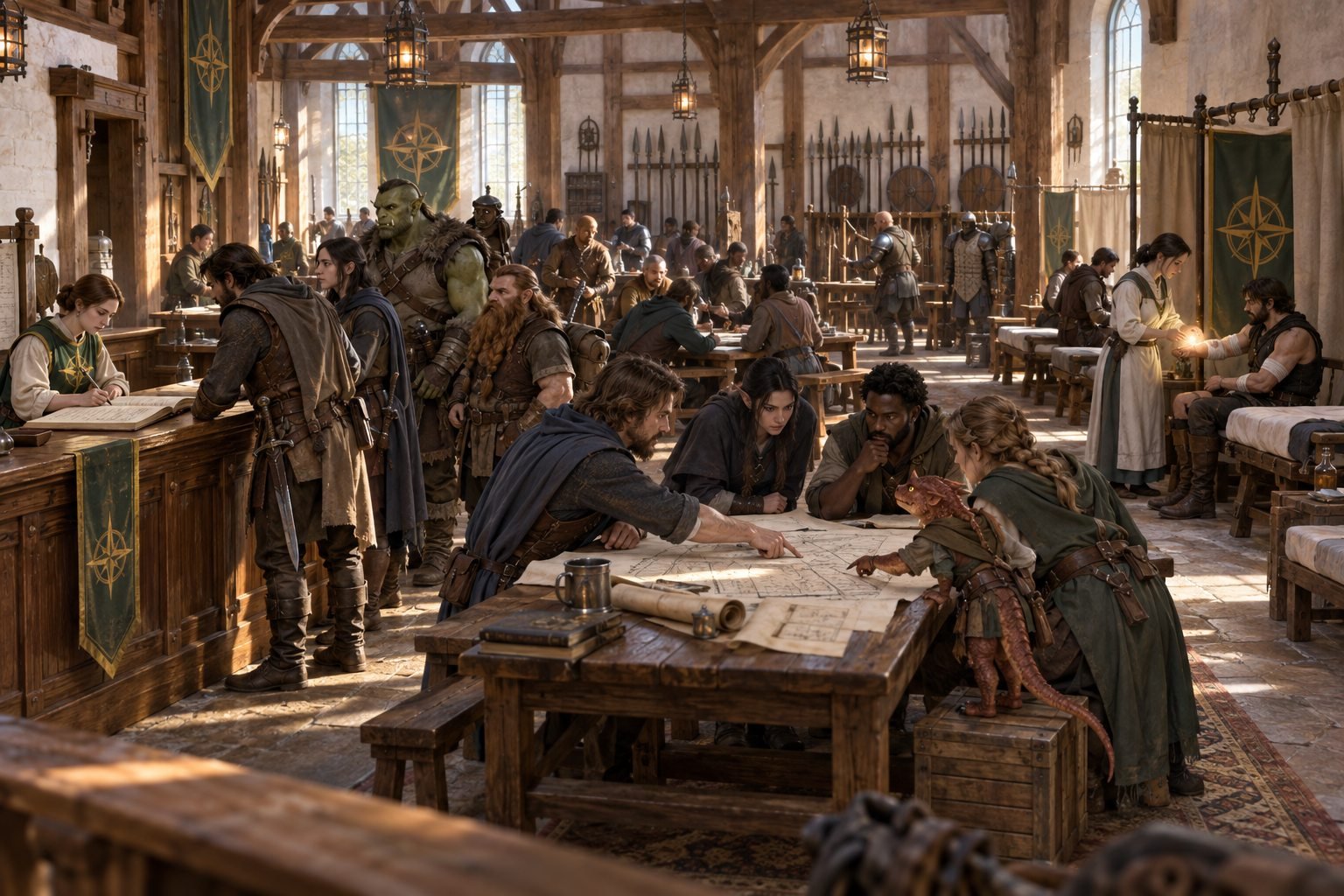
Nobody who has been through the gate calls it training. The dungeon has a waking mind, and his name is Dorian. What he builds is real: the stone, the creatures, the traps, and the wounds they leave. A sword cut taken on the ninth floor still needs stitching back in Goodberry, and a team that goes too deep can come back short a member, or not come back at all. People die in the Delve, and they die often.
Every month Dorian builds the Delve around a new theme, and everything inside is made to fit it: one month slimes, another the undead. The month he built the Twilight Court is still talked about in the hall. The loot is his design too, made for that month's motif, and it is as real as anything carried out of any dungeon in Xeres.
Dorian also owns the rights to everything that breaks or perishes in his realm. Shattered blades, spent potions, ruined armor and the bodies of the dead all stay with him. Every delver signs that they understand this before the bell, and the Guild makes sure they read it first.
Practice Runs
Outside the Delve, the Guild books practice runs in Safe Mode. They pay five to ten gold, and the wounds are still real. The only difference is that Dorian will not let you die: at the moment death would have happened, he throws you out of the dungeon instead. Most delvers learn what the deep floors feel like this way before they ever enter a Delve.
What the Guild Does
Team Charters
A team of up to six registers under a name and a pennant. The Guild keeps the roll, settles disputes over who belongs to which team, and makes sure every name is on the visitors scroll before the gate opens.
Finding a Team
Solo delvers sign the open book at the counter, and the clerks match them by skill and temperament. Plenty of teams started as strangers the Guild sat down at the same table.
Readiness
The gate will not open for anyone who is not at full health, so the Guild keeps healers on hand. Gear checks, a practice yard and Safe Mode practice runs round it out.
Debriefs and Ledgers
Every run is written up when the team comes out: how deep, how long, what went wrong, and who did not come back. The ledgers are open to any member, which is why the back room is never empty.
The Monthly Delve
On the first morning of every month, at dawn, the Guild's officials set the Dungeon Master's Pedestal and ring the bell, and every chartered team walks through the gate into the month's dungeon. There is no Safe Mode in a Delve. Teams stay in until they are beaten, dead or call it, and the Delve lasts as long as the last team holds out, which is why it fills the whole first week. The deepest floor reached wins.

The Rules
- Teams of up to six. Nobody runs for two teams in the same month.
- Every entrant is at full health and has signed the visitors scroll before the bell.
- Bring any gear you like. The Guild checks it; it does not limit it.
- There is no Safe Mode. Wounds are real, and so is death.
- Everything that breaks or perishes inside belongs to Dorian, and every entrant signs that they understand it.
- No outside help once the bell rings: no messages in or out, and no one in the dungeon who is not on the team.
- A run ends when the last member standing goes down or the team calls quit. The deepest floor reached is the score. If two teams tie, the one that got there first takes the higher place.
The Guild cannot make the dungeon safe, and it does not try to make it easy. What it can do is make sure every team faces the same one, on the same morning, under the same rules. Dorian decides the rest, and he watches every Delve.
The Depth Board
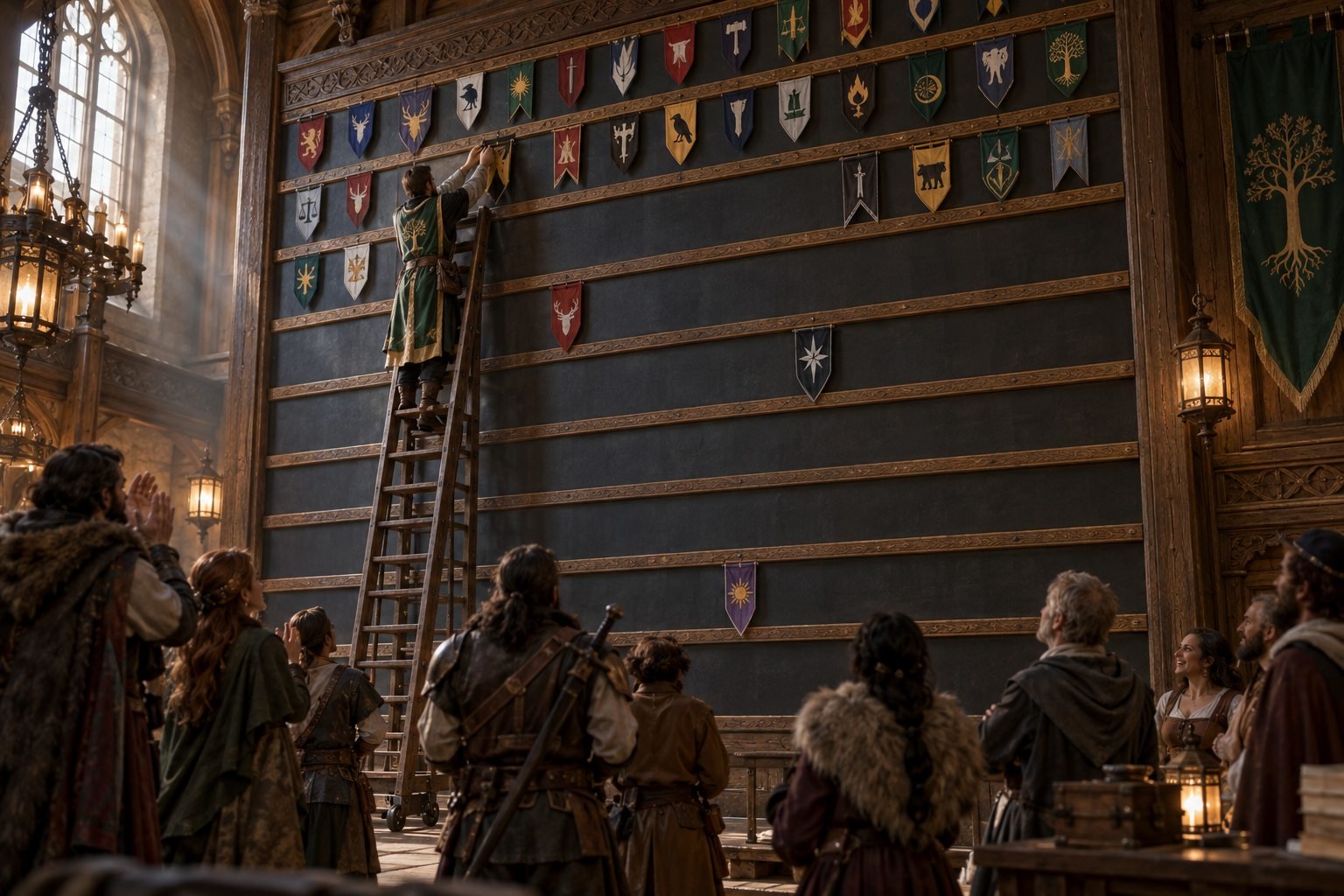
The great slate wall inside the hall is ruled into twenty oak rails, one for each floor, the first near the ceiling and the twentieth near the floor. When a team comes out, a clerk climbs the ladder and pins its pennant at the deepest rail it reached. By the end of the week the whole month's Delve can be read at a glance, and the crowd in front of the board on the last evening is the biggest the hall ever sees.
This Month's Delve
Opening the Guild ledger...
Rewards and Honors
The Guild pays no purse. The rewards come from the dungeon: whatever a team carries out of a Delve is theirs, and it is as real as the danger it cost. What the Guild gives is the honor.
First
The Lantern
The Delver's Lantern, kept by the winning team until next month's Delve, and its pennant pinned in gold.
Second
Silver
Its pennant pinned in silver.
Third
Bronze
Its pennant pinned in bronze.

Every team that finishes gets its pennant on the board for the month, and every name goes into the Guild's ledger for good, including the names of those who did not come back.
The Betting Book
Most of Goodberry has a little money on the Delve. People bet on which team will take the Lantern, how deep a team will get, whether a new team will survive its first month, and anything else two neighbors can argue about over a pint. Before the Guild, those bets were made in tavern corners and settled with fists, and more than one winner never saw a coin. Now they come to the Guild.
Every bet is handed to the Guild at the betting counter, written into the book, and held until the Delve is over. The clerks set the odds for every team from the ledgers, chalk them up beside the counter, and pay each winning bet by the odds it was placed at. A wager made at the Guild counter is legal, recorded and paid. A wager made anywhere else is a handshake and a hope.
The book closes when the bell rings, and no delver may bet against their own team. That is the other reason the Guild has to belong to the city: nobody would trust a book kept by a family, a shop or a team with something to gain.
The betting book is the biggest part of the Guild's income. It pays for the healers, the clerks, the hall and the free membership, and whatever is left over goes to the city that owns it.
Why the Crown Stays Out
Queens Arties, Salia and Hana and King Xaneborr have not joined the Guild, and nobody expects them to. The arithmetic is simple. If the crown entered and won, it would look like a tyranny handing itself a prize from its own city. If the crown entered and lost, every rival of Haven would hear that its rulers had been beaten by a team of farmers and smiths. Neither is a risk worth a trophy.
So they watch. Xaneborr bought the dungeon so his people could grow strong in it, and the Delve is the clearest proof that they are doing it without needing him.
Joining
Membership is free to anyone who lives in Haven, and plenty of delvers come over from Rokoura and Silmarithil to run with a Goodberry team. Sign the roll at the counter, and a clerk will ask what you can do and what you want from the dungeon. The Guild sets no age limit: the clerks judge what a delver can do, not how old they are, and two of the strongest teams in the hall are mostly children trained by King Xaneborr himself. Visitors from beyond Haven are welcome to watch the Delve from the square, but they cannot enter it.